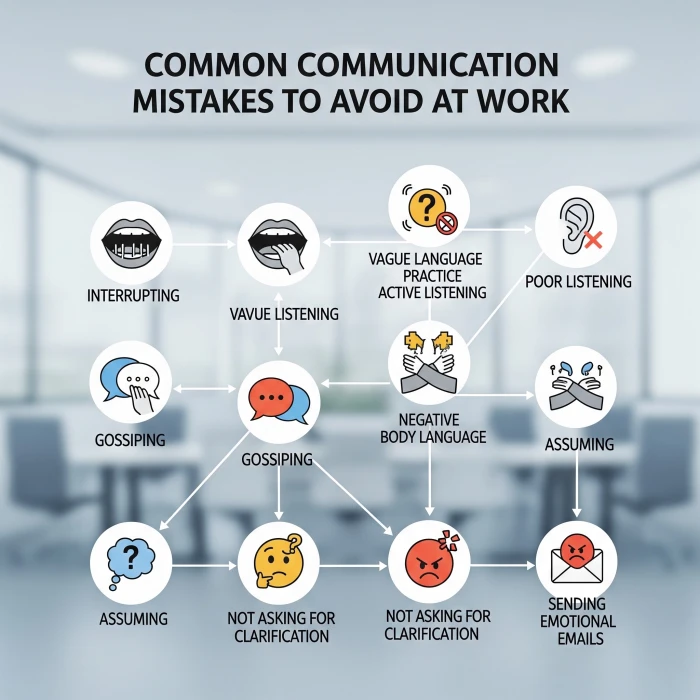
Strong communication is one of the most valuable skills in any workplace. Whether you're a student, intern, or experienced professional, the way you communicate can influence teamwork, productivity, and career growth. However, even small communication mistakes can lead to misunderstandings, missed deadlines, and unnecessary conflicts. Here are some common mistakes to avoid.
1. Not Listening Actively
Communication isn't just about speaking—it's about listening. Interrupting others or assuming you already know what they mean can create confusion. Pay attention, ask questions when needed, and ensure you understand the message before responding.
2. Using Unclear or Vague Language
Messages that lack clarity often lead to mistakes. Be specific when giving instructions, sharing updates, or asking questions. Clear communication saves time and helps everyone stay on the same page.
3. Ignoring Professional Email Etiquette
Emails should be concise, polite, and well-structured. Avoid using informal language, typing in all capital letters, or sending messages without reviewing them. A professional email reflects your attention to detail and respect for others.
4. Overlooking Non-Verbal Communication
Your body language, facial expressions, and tone of voice speak just as loudly as your words. Maintaining eye contact, using a confident posture, and speaking respectfully create a positive impression during meetings and conversations.
5. Hesitating to Ask Questions
Many people avoid asking questions because they fear appearing inexperienced. In reality, asking thoughtful questions shows curiosity and a willingness to learn. It's always better to clarify than to make incorrect assumptions.
6. Not Accepting Feedback Positively
Constructive feedback is an opportunity to improve. Listen with an open mind, avoid becoming defensive, and use suggestions to develop your skills and performance.
Communicate with Confidence
Good communication is a skill that improves with practice. By listening carefully, speaking clearly, writing professionally, and respecting others' perspectives, you can build stronger workplace relationships and create more opportunities for career success.
Remember: Great communication doesn't just help you complete tasks—it helps you build trust, strengthen teamwork, and grow into a successful professional.